Letter from ANZAC soldier who survived the Nek attack sheds light on history
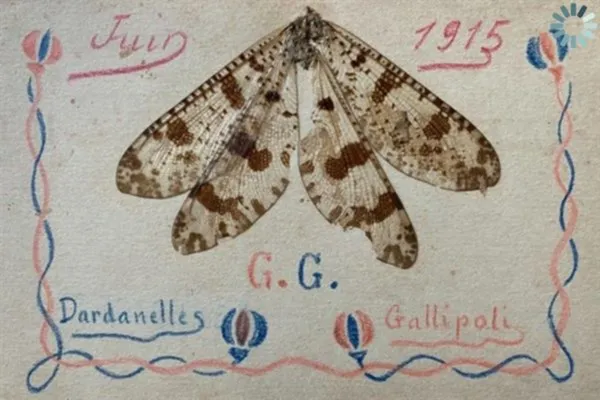
Mehmet Bayer, August 6 (Hibya) - A letter written by Australian soldier Lionel Simpson, one of the survivors of the Nek attack (Battle of the Nek–Baby 700 Assault) on August 7, 1915—one of the bloodiest and most dramatic engagements of the Gallipoli Campaign—reveals the horror of the assault and the tragedy experienced on the battlefield.
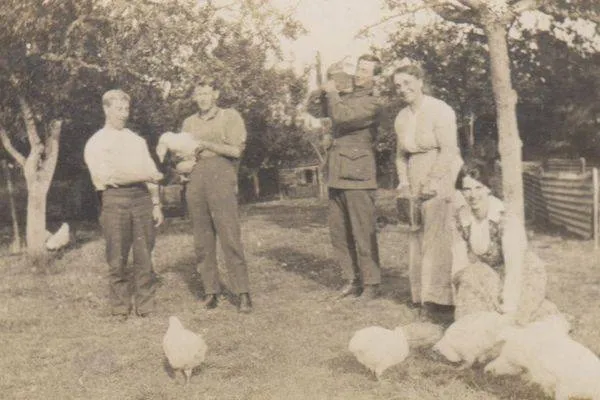
Lionel Simpson, who worked as a carpenter in the Victorian towns of Corryong and Alexandra, enlisted as a volunteer in the Australian Imperial Force (AIF) on October 22, 1914, at the age of 24. Serving with a reinforcement unit of the 8th Light Horse Regiment, Simpson was first deployed to Egypt on April 13, 1915. After completing his training, he was sent with his regiment to the Gallipoli front to reinforce the troops that had landed on April 25.
Simpson arrived at Gallipoli on May 26, 1915. Before the August Offensive, he spent nearly two months rotating between front-line and reserve trenches. The offensive aimed to draw Ottoman forces toward the ANZAC sector through attacks at various points along the front, thereby facilitating the planned British landing at Suvla Bay.
As part of this plan, Simpson took part in the first assault wave during the Nek attack launched on the morning of August 7, 1915. His assignment was to carry a long wooden plank with another soldier to be thrown over the Ottoman barbed wire. However, when the artillery bombardment ended earlier than planned, Ottoman troops returned to their trenches and prepared for the attack.
When the order to advance was given, Australian soldiers left their trenches and charged toward the Ottoman positions. Simpson noticed that the soldier carrying the plank with him had been seriously wounded just as Major Thomas Redford, commander of the first assault wave, was shot and fell to the ground. Simpson himself was also wounded in the shoulder. After receiving treatment in Egypt, he spent the remainder of his military service in the deserts of the Middle East, where he was promoted to sergeant and awarded the Distinguished Conduct Medal for his bravery.
After the war, Simpson returned to Australia and worked as a building contractor. He died in 1991 at the age of 100. Throughout his life, he rarely spoke about his experiences at Gallipoli.
In letters that became part of the archives of Australian author and historian Carl Johnson, who was researching First World War veterans in 1986, Simpson described the most harrowing moments of the Nek attack in detail. In one of his letters, he wrote: "I was in the first assault wave at the Battle of the Nek. The enormous number of casualties deeply saddened me. Our regiment lost 21 officers."
In later recollections, Simpson stated that the main reason for the failure of the attack was the overwhelming firepower of the Ottoman defenders.
"What really destroyed us was the firepower. We were facing around thirty machine guns firing hundreds of rounds every second," Simpson recalled. He explained that the soldier carrying the wooden plank with him was shot in the knee, while he himself was wounded in the shoulder but continued advancing. He also remembered losing many of his comrades during the assault.
Simpson further criticized the command decisions surrounding the attack, saying he believed the orders had led to the deaths of hundreds of soldiers. He also said he could never forget the psychological devastation suffered by a soldier who lost his brother in the same assault. These reflections are regarded as among the most striking personal testimonies illustrating the human dimension of the Gallipoli Campaign.
Europe Asia News
 Facebook
 Tweeter
 Whatsapp