EU targets Russian LNG carriers that continue to use European ports
Brussels, December 5 (Hibya) – According to a report by Politico, the European Union is targeting Russian LNG carriers that continue to use European ports. The measure will prevent Russian tankers from using European ports even if the gas they carry does not originate in Russia.
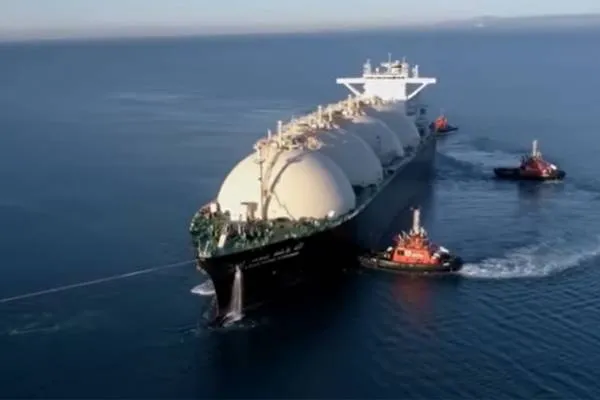
The European Union wants to stop Russian gas tankers from using a Belgian port to ship non-Russian gas worldwide and finally sever its ties with the country’s energy shipping fleet.
As the EU steadily tightens sanctions on Russian gas entering Europe in order to shrink the Kremlin’s war chest, parts of Russia’s shipping sector have increasingly fallen out of favor.
So-called transshipment services, under which ports offer LNG suppliers long-term “slots” to unload or reload cargoes for onward shipment elsewhere, remain legal under the newly adopted EU-wide ban on imports of Russian gas, provided that the gas itself does not come from Russia.
The export of Russian gas outside the EU is already permitted, and the new law will also cover its re-export back into the EU until the ban is gradually phased in over the coming years.
However, the use of these services by Russian tankers will still be legal, meaning they can use the transshipment infrastructure to move gas from other countries such as the United States or Qatar into circulation. Around two-thirds of Belgium’s gas imports flow to the rest of Europe, particularly to Germany.
The most important provider of transshipment services is the Belgian LNG terminal operator Fluxys, which operates in the port of Zeebrugge near Bruges. It has a 20-year contract with the Siberian gas production venture Yamal LNG, led by Novatek, Russia’s second-largest natural gas producer, running until 2039.
LNG tankers find it easier to unload their cargoes in North Sea ports than to navigate the ice-covered Arctic route to Asia, which in winter can be impassable even for icebreakers.
However, the continued use of European ports, especially those in Belgium, has drawn criticism from some member states and lawmakers who are drafting a broader gas ban. According to two people involved in the talks, Belgium lobbied during the intense negotiations over the ban against including transshipment services, arguing that the gas regime change would already cover the relevant Russian LNG ventures.
Yet the continuing resistance of Members of the European Parliament to this arrangement led to a compromise at high-level talks on Tuesday. According to two people familiar with the discussions, the European Commission said it would seek to address the issue of transshipment infrastructure in the EU’s 20th sanctions package against Russia, which is expected to come into force early next year.
Europe Asia News
 Facebook
 Tweeter
 Whatsapp